

September is National Suicide Prevention Month, a time to raise awareness, reduce the stigma surrounding mental health, and remind college students that asking for help is a sign of strength—not weakness. College can be an exciting time of independence, new friendships, and personal growth, but it can also bring academic pressure, relationship challenges, financial stress, homesickness, loneliness, and other experiences that can affect mental health.
The Facts
Each year, approximately 24,000 college students attempt suicide, and about 1,100 students die by suicide. Suicide is the second-leading cause of death among U.S. college students. American Foundation for Suicide Prevention
College freshmen account for approximately 40% of all undergraduate suicides, making the transition to college an especially important time to focus on mental health. Research study on college student suicide.
These numbers are a reminder that mental health is an important part of college safety. Just as students learn where to find the library, dining hall, campus police, and academic support, they should also know where to turn when they—or a friend—are struggling emotionally.
If You’re Struggling, Don’t Go It Alone
College can sometimes create the feeling that you are supposed to have everything figured out. You may feel pressure to keep up academically, make friends, manage your finances, choose a career path, or simply adjust to being away from home.
You don’t have to handle all of that by yourself.
If you’re struggling with your mental health, start by using the resources available on your campus. Most colleges and universities have mental health professionals, counseling centers, health services, crisis resources, and other support systems specifically designed for students.
Don’t wait until things become overwhelming before reaching out.
Know Your Campus Resources
Before you need them, take a few minutes to find out:
- Where is your campus counseling or mental health center?
- How do you make an appointment?
- Does your school offer 24/7 mental health or crisis support?
- What resources are available after regular business hours?
- Is there a campus health center?
- Who can you contact if you’re worried about a friend?
- Does your school have a mental health or safety app?
- What is the campus emergency number?
Put important numbers in your phone. Knowing where to go before you need help can make it much easier to take that first step when you’re struggling.
And remember: You don’t have to be experiencing suicidal thoughts to ask for help. Feeling persistently sad, anxious, overwhelmed, isolated, hopeless, or unable to keep up with everyday responsibilities is enough reason to talk with someone. NIMH recommends seeking professional help when symptoms are severe, persistent, or interfering with daily life.
Asking for help early can prevent a difficult situation from becoming a crisis.
Know the Signs in Those Around You
Sometimes the person who needs help isn’t you—it’s your roommate, friend, classmate, teammate, fraternity or sorority member, or someone you see every day.
You may notice changes before anyone else does.
According to the National Institute of Mental Health, warning signs can include:
- Talking about wanting to die or feeling like there is no reason to live
- Feeling hopeless, trapped, or like a burden to others
- Withdrawing from friends and activities
- Saying goodbye to people
- Giving away important possessions
- Making a plan or researching ways to die
- Taking dangerous risks
- Experiencing extreme mood swings
- Significant changes in sleeping or eating
- Increasing use of drugs or alcohol
- Talking about unbearable emotional or physical pain
One important thing to remember: You don’t have to be certain someone is suicidal before you reach out.
If something feels different about a friend, ask.
How Can You Help?
You don’t have to be a mental health professional to make a difference. You just need to be willing to notice, listen, and help someone connect with support.
NIMH recommends five steps when you are concerned about someone:
1. Ask.
Don’t be afraid to ask directly, “Are you thinking about suicide?” Asking someone about suicide does not put the idea in their head. In fact, asking directly can help identify someone who needs immediate support.
2. Be there.
Listen without judgment. You don’t need to have the perfect response or solve their problems. Sometimes simply letting someone know, “I’m here. You don’t have to go through this alone,” can be incredibly important.
3. Help keep them safe.
If someone tells you they are thinking about suicide, take them seriously. Don’t leave them alone if they are in immediate danger, and don’t promise to keep suicidal thoughts a secret. Help them connect with someone who can provide appropriate support.
4. Help them connect.
Offer to walk with them to the campus counseling center, help them contact a trusted professor or advisor, call a family member, or connect them with a crisis resource. You don’t have to be the person who provides all the help—you can be the person who helps them find it.
5. Follow up.
Check in later. Send a text. Ask how they’re doing. Invite them to grab coffee or eat lunch. Continuing to show up can remind someone that they are not alone.
You Could Be the Person Who Makes the Difference
Suicide prevention isn’t only the responsibility of counselors, doctors, or campus administrators. It is something all of us can be part of.
College students spend much of their time surrounded by other students. You may be the person who notices that your roommate isn’t getting out of bed. You may be the friend who realizes someone has suddenly stopped coming to class. You may receive a late-night text from someone who says they don’t know how much longer they can keep going.
Don’t ignore it.
Reach out. Ask the question. Listen. Stay with them. Help them find professional support.
And if you are the person who is struggling, remember this: You are not a burden, and you don’t have to figure everything out today. Start with one person. A friend. A parent. A professor. A resident assistant. A coach. A counselor. Someone you trust.
There is help available, and reaching out is a powerful first step.
If You or Someone You Know Is in Crisis
If you or someone you know is experiencing suicidal thoughts or is in immediate danger, get help immediately. In the United States, call or text 988 to reach the 988 Suicide & Crisis Lifeline. Trained crisis counselors are available 24/7. If there is an immediate, life-threatening emergency, call 911.
For college students, also remember to use the resources right on your campus. Know where to go before a crisis happens—and don’t be afraid to go there when you need help.
National Suicide Prevention Month is a reminder that awareness matters, conversations matter, and looking out for one another matters. Sometimes, simply being willing to notice and reach out can help save a life.
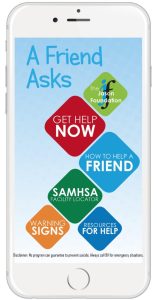
“A Friend Asks” App
Would You Know How to Help a Friend Who is Contemplating Suicide?
“A Friend Asks” is a FREE smartphone app that helps provide the information, tools, and resources to help a friend (or yourself) who may be struggling with thoughts of suicide. Download the app today and encourage friends and family to do the same. Education is the key to prevention, and with information like this as close as your smartphone, you could help save a life!
The “A Friend Asks” App contains the following information:
-
-
-
-
-
-
- warning signs of suicidal ideation
- how to help a friend
- how to get help now
- what to do and what not to do
- the B1 Program
-
-
-
-
-
If in an immediate crisis, call 911. If you or a friend needs to talk with a counselor for help or needs resources available in your area, call or text the Suicide & Crisis Lifeline (anytime 24/7 at 988) or use the Get Help Now button on the app. The app also contains a Spanish translation that can be toggled after launching. Available for both Android and iPhone.
*The above information regarding the “A Friend Asks” App is from the Jason Foundation.
Recent Comments